Reduce energy costs. Use energy intelligently.
The aimpera platform forecasts your energy demand, takes prices, generation and operational requirements into account and controls flexible consumers proactively. This way, you use energy when it makes the most economic sense – automated and within your operating limits.
Volatility in the energy market
Negative price periods are becoming more important.
Price differences over time create economic relevance.
Energy-intensive consumption in industry and commercial businesses reacts sensitively to price fluctuations.
Fluctuating energy prices on the spot markets and high risk premiums on fixed schedules make planning harder.
Sources: SMARD / BNetzA, FfE / EPEX Spot · Day-ahead 2025, DE-LU bidding zone
Volatility makes flexibility valuable.
Flexible energy management helps reduce cost risks and capture opportunities from market movements.
→ With intelligent energy management, reduce costsWhere intelligent energy management cuts costs
One system, many value levers – explained by benefit. Choose a use case and see how aimpera creates value proactively.
The platform for energy
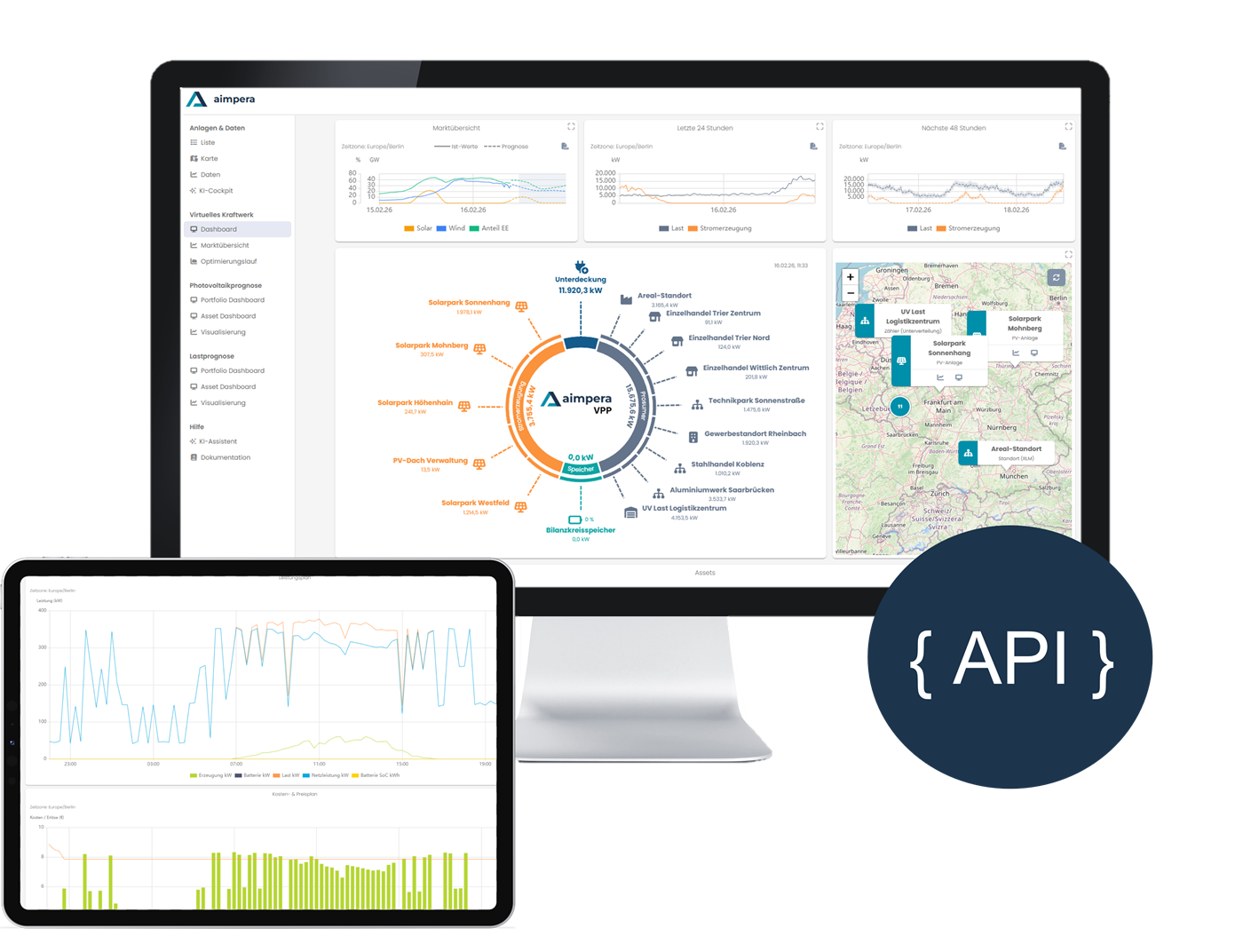
Understand, optimize and safely control energy flows.
The aimpera platform connects energy and asset data, creates rolling forecasts and optimizes consumers, generators and storage within technical and operational limits. In ongoing monitoring, forecasts, schedules and actual values are compared transparently. Built API-first, the platform integrates into your existing system landscape through open interfaces.
Benefits
- Increase self-consumption, reduce load peaks and use dynamic electricity prices
- Coordinate storage, PV, charging infrastructure and heating and cooling systems together
- Schedule flexible industrial processes and production loads cost-effectively
- Optimize centrally from a single site to a multi-site portfolio
Optimize self-consumption
Use self-generated electricity on site wherever possible.
AI-based forecasts of generation and load enable the forward-looking use of locally generated energy – maximizing self-consumption and avoiding expensive grid purchases.
Benefits
- Use locally generated electricity instead of feeding it in cheaply
- Align storage and flexible loads with generation
- Less expensive grid purchasing in hours of low generation
Reduce load peaks
Prevent the expensive quarter-hour before it happens.
Highly accurate load forecasts detect upcoming peaks early; AI optimization smooths power peaks automatically – before they drive up the demand charge for the entire year.
Benefits
- Lower the annual peak load and reduce the demand charge
- Shave proactively instead of reacting after the fact
- Production and comfort remain untouched
Reduce grid fees
Shift consumption into time windows with lower grid fees.
Forecast-based load control deliberately shifts consumption into time windows with lower grid fees – for example outside the high-load time windows relevant to atypical grid usage.
Benefits
- Keep consumption out of high-load time windows
- Create the prerequisite for reduced, individual grid fees
- Plannable and verifiable through the actual load profile
Use low spot market prices
Plan consumption and storage along price signals.
Automated optimization plans load shifting and storage operation along expected price signals – within your defined operating limits.
Benefits
- Use low-cost hours, avoid expensive hours
- Charge storage when electricity is cheap or negatively priced
- Schedules adjusted on a rolling basis to new price forecasts
Use storage intelligently
One storage system, several use cases – optimized together.
Forward-looking AI optimization decides when to charge and discharge and uses storage deliberately for different use cases – from self-consumption and peak shaving to arbitrage.
Benefits
- One storage system for several value levers at the same time
- Charge/discharge schedule that takes degradation into account
- Safe operating states maintained at all times
Use further flexibility
Turn available flexibility into value – with operational safety.
Available flexibility is identified on the basis of forecasts and used safely for additional revenue potential – for example on the balancing energy market.
Benefits
- Unlock controllable consumers and generators as flexibility
- Additional revenue potential, e.g. on the balancing energy market
- Always within your operational limits
Optimized power procurement strategy
Think procurement and operation together.
Consumption forecasts, on-site generation and flexible loads feed into procurement – across spot and forward markets, OTC and PPAs. This way, aimpera procures what is actually needed, and available flexibility complements procurement.
Benefits
- Procurement based on reliable consumption and generation forecasts
- On-site generation, storage and flexible loads taken into account
- Less residual power purchasing and smaller deviations
Sector coupling
Link electricity, heat and mobility across the whole system.
Linking electricity, heat and mobility for system-wide use of renewable energy: available flexibility is identified on the basis of forecasts and safely directed to additional applications.
Benefits
- Sector coupling of electricity, heat and mobility
- Unlock additional revenue and utilization potential
- System-serving, higher share of renewable energy
Systematically optimize energy costs
Not only how much energy is consumed, but also when and how. Load peaks, rigid schedules and uncoordinated consumers can cause additional costs. Forward-looking control helps use available flexibility deliberately – within your operational requirements.
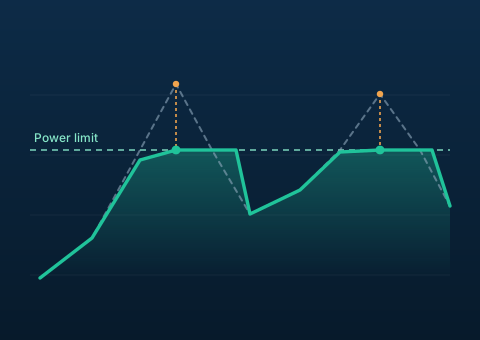
Reduce energy costs & demand charges
- Shave load peaks and reduce the demand charge
- Make deliberate use of dynamic electricity prices and grid fees
- Increase self-consumption from PV and storage
- From the commercial site to production with high power demand
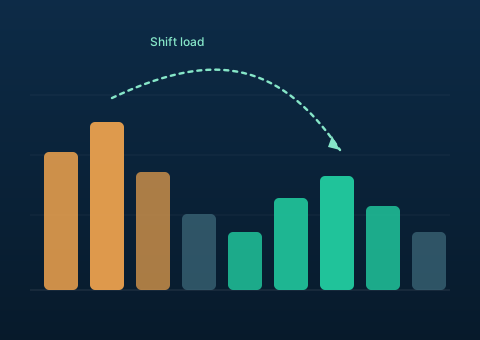
Use existing flexibility
- Storage, PV, charging points, heating & cooling coordinated instead of isolated
- Shift controllable process and production loads into low-cost hours
- Optimize predictively and plannably
- Weighted according to your economic and operational priorities
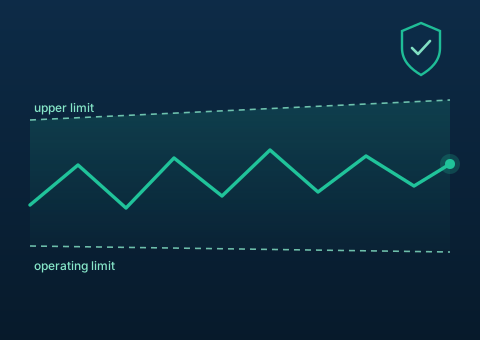
Operationally safe – commercial and industrial
- Optimization strictly within your technical and operational limits
- Vendor-open connection, manually overridable at any time
- Fallback logic and safe operating states
- Scales from a single site to a portfolio
Forecast. Optimize. Control.
One connected process – from the forecast to the safe control signal.
Forecast generation & consumption
Forward-looking forecasts of load, PV generation and flexible assets as the basis of every optimization.
Optimize economically & technically
Cost-optimal schedules that take prices, grid fees and technical restrictions into account.
Safe schedules & control signals
Reliable, operationally feasible schedules – vendor-open towards controllers and assets.
Load profile · before / after
Predictive control along the day-ahead price – with battery, PV & flexibility · schematic
Schematic example data – in a project, aimpera calculates with your real load profiles, prices and plants.

Volatility makes flexibility valuable. Intelligently unlocking this potential in existing assets is, for us, the next value-creation phase of the energy transition.
Optimization within your limits
The optimization takes technical and operational restrictions into account – the process is not disturbed.
- Power and capacity limits
- Minimum run times
- Comfort or production restrictions
- Storage state and degradation
- Local fallback logic
- Manual override
- Safe operating states
Reduce energy costs – through intelligent, forward-looking control.
In commercial businesses, energy costs do not arise from the kilowatt-hours consumed alone. Load peaks, unfavourable purchasing times and low self-consumption also affect profitability. At the same time, PV, charging infrastructure, heat pumps, storage and other electrical consumers add new controllable components.
aimpera forecasts consumption and on-site generation and coordinates flexible assets proactively. This makes it possible to reduce load peaks, make better use of self-generated electricity and shift energy purchasing deliberately into more economical time windows – within the operational and technical limits of the respective assets.
Reduce load peaks · Increase self-consumption · Optimize purchasing costs
Energy connects industries.

Refrigeration, air conditioning, lighting, PV and charging infrastructure create high electrical loads. Refrigeration flexibility and on-site generation also offer opportunities to control consumption more precisely in time.

Baking ovens, refrigeration, ventilation and hot water create pronounced load profiles. Production times and high simultaneity make forward-looking control particularly interesting.

Kitchen, refrigeration, ventilation and air conditioning often run at the same time. Intelligent control helps avoid unnecessary peaks and use flexible consumers more cost-effectively.
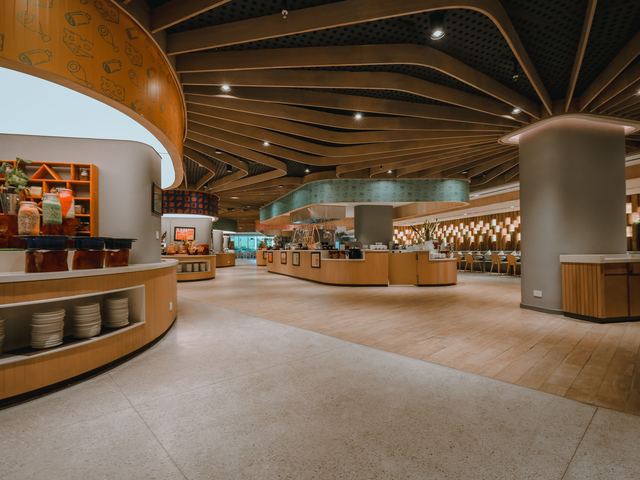
Hot water, heating, cooling, ventilation, kitchen and charging infrastructure meet highly fluctuating usage. Forecasts help operate systems closer to actual demand and coordinate loads better.

Lighting, conveyor systems, building services and increasingly electric fleets are changing load profiles. Connection capacity and forward-looking control of charging infrastructure become particularly relevant.
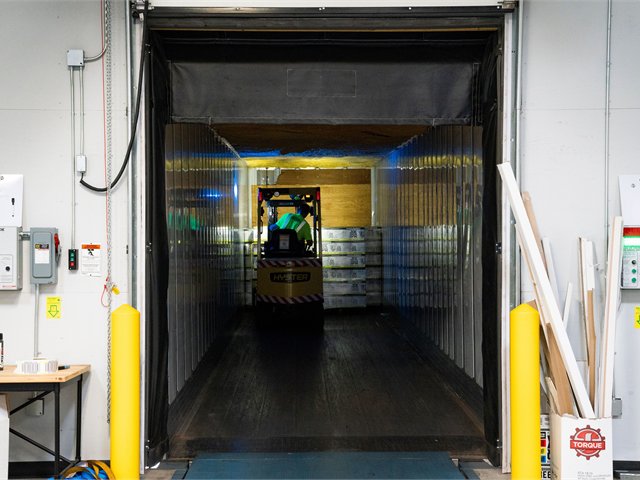
Refrigeration dominates energy demand and, within defined temperature limits, also offers flexibility. This can be used to reduce peaks and exploit more economical time windows.

Heating, cooling, ventilation, PV and charging infrastructure are growing into one shared energy system. Forecasts and intelligent control coordinate these components more according to demand.

Building services, common areas, different usage times, PV and charging infrastructure lead to complex load profiles and high simultaneity.

Workshop, building services, PV and AC and DC charging points often meet a limited connection capacity. Intelligent load management coordinates the consumers and prioritizes available power.

Ventilation, air conditioning, hot water, lighting and sauna or wellness areas lead to long operating hours and characteristic load profiles. Usage and operating hours provide important signals for control.

Washing, drying, heat and electric drives create high and partly plannable loads. Production processes and energy use can be better aligned with each other.
Optimize energy without slowing down value creation.
In production facilities, energy is not an isolated cost block. Shift schedules, process windows, asset availability, quality specifications and delivery dates set clear limits. At the same time, electricity prices, grid fees, on-site generation, storage and regulatory requirements all act on the same operation.
aimpera brings these layers together. Loads, generation, storage and flexible assets are evaluated and optimized proactively – within the technical and operational conditions of the production process.
Cut costs · Use flexibility · Control risks
Industrial flexibility is never arbitrary. Minimum run times, batches, cycle times, shift schedules, temperature windows, asset states and quality requirements determine when a consumer can actually be shifted or controlled.
What this means for aimpera: Only technically and operationally permissible degrees of freedom are optimized. Production planning and process restrictions are treated as fixed conditions of the optimization.
Revenue meters, sub-meters, machine measurements, PLC/SCADA, building management systems as well as MES and ERP data are often held in different systems, with different time resolutions and data quality.
What this means for aimpera: Relevant energy, asset and operating data are combined into a consistent basis for decisions. Existing systems provide the context for forecasting, optimization and control.
Short power peaks can cause considerable costs. At the same time, transformers, lines and grid connections set technical limits – especially when production is electrified or additional consumers, charging infrastructure and storage are integrated.
What this means for aimpera: Load developments are forecast early. Flexible consumers and storage can be deployed deliberately before critical power peaks or technical limits are reached.
Spot and forward markets, OTC procurement, PPAs, on-site generation and storage create different economic options. In addition, grid fee mechanisms and regulatory frameworks keep changing.
What this means for aimpera: Operational flexibility is combined with load, generation and price forecasts. What matters is not maximum shifting, but the most economically sensible use of the flexibility that is actually available.
The German Energy Efficiency Act (EnEfG), ISO 50001, energy audits as well as energy and CO₂ reporting raise the requirements for data quality, documentation and the traceable evaluation of measures.
What this means for aimpera: The same reliable data basis used for operational decisions can also support energy indicators, measure evaluation and reporting. Operational energy management and verification are not treated as separate data worlds.
Many industries. Individual potential.

Continuous processes with a high base load; flexibility in refiners, stock preparation and the drying section – within quality specifications.
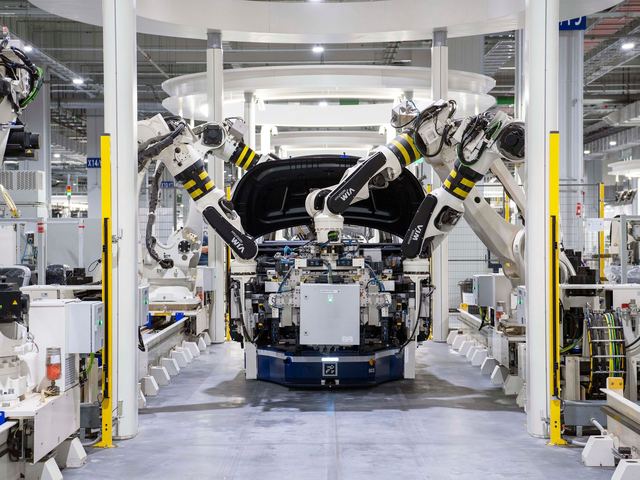
Cycle-timed manufacturing in shift operation; paint shops, presses, ventilation and charging infrastructure offer controllable loads with high simultaneity.
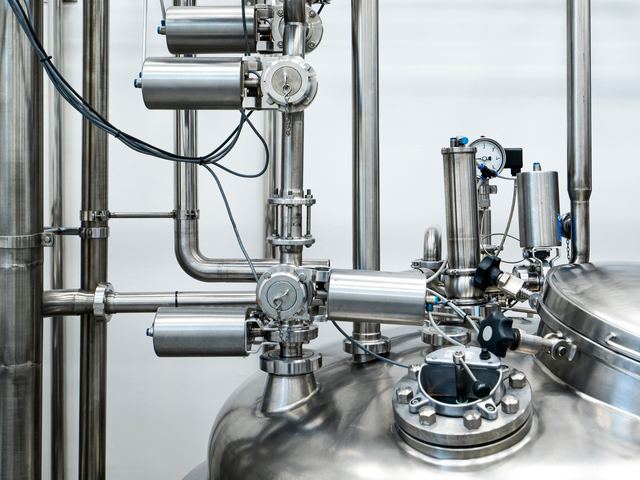
Continuous operation with strict safety and process restrictions; cooling, compressed air and reactor cooling as flexibility.
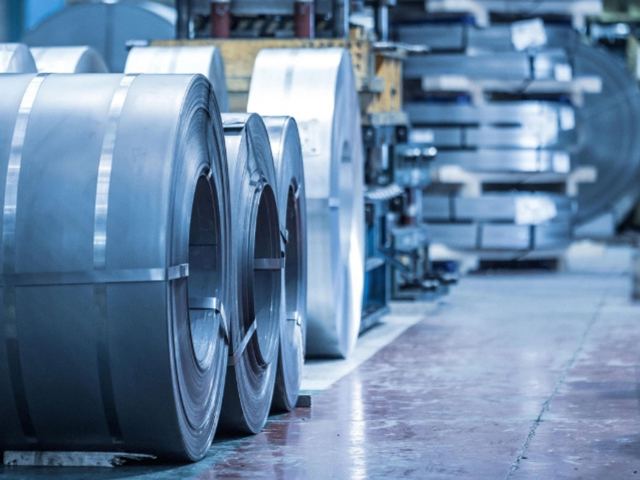
Very high load peaks from furnaces and rolling mills; grid connection limits and process heat are the focus.
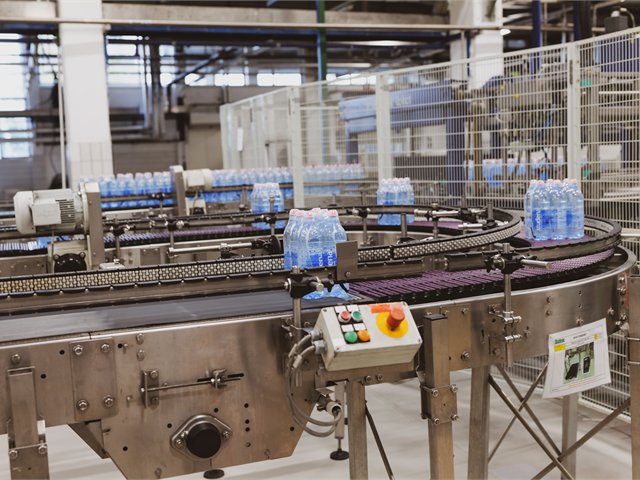
Cooling, freezing and compressed air shape demand; flexibility within cold chain and hygiene requirements.
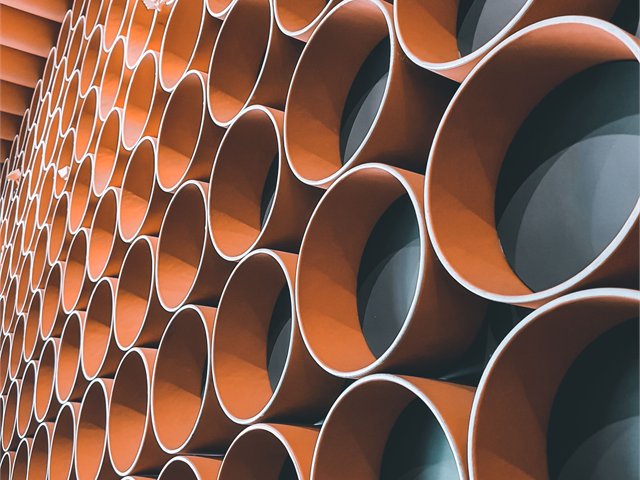
Temperature-critical processes in injection moulding and extrusion; cooling and dryers as controllable loads.
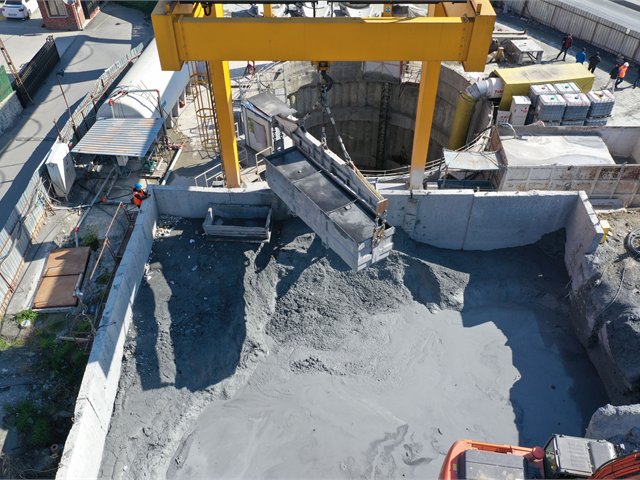
Energy-intensive grinding and firing processes; material buffers allow loads to be shifted in time.
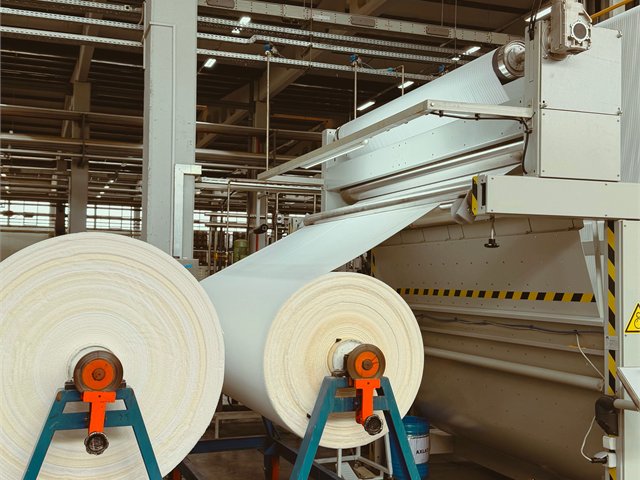
Heat- and water-based processes in batch operation; dyeing, drying and air conditioning as flexibility.
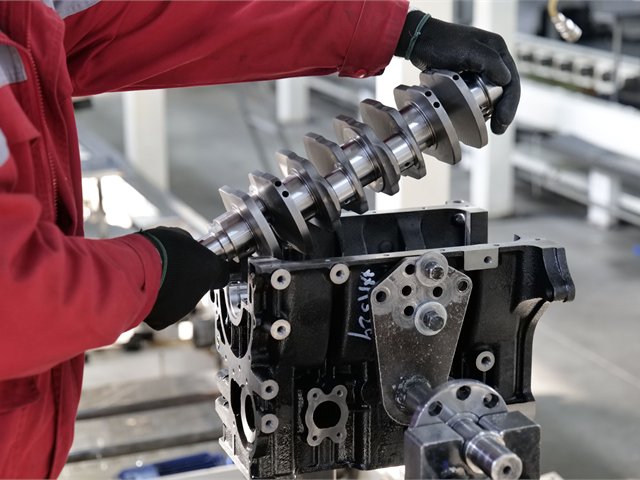
Heterogeneous loads with varying utilization; machining, hardening, compressed air and ventilation can be coordinated.
Into operation in six steps
aimpera records assets, load profiles, grid connection and your economic and operational goals – as the basis for everything that follows.
Meters, controllers, storage, PV and flexible consumers are connected in a vendor-open way and without changing systems.
A model of your site, including technical and operational restrictions, serves as the basis for simulation and optimization.
Schedules are first simulated and evaluated against your current situation – without any intervention in ongoing operation.
The optimization first runs in shadow mode – in parallel and as a recommendation, before assets are actively controlled.
Once you have given approval, aimpera controls proactively – continuously monitored and manually overridable at any time.
Energy management in detail
I have complex processes and loads on site – can these be optimized too?
Yes, that is exactly aimpera's focus. Plenty of providers control a wallbox in a private household – aimpera becomes interesting when things get complex. Together with you, aimpera analyzes the processes at the site, identifies usable flexibility and defines the technical and operational limits of control. This operating logic is then taken into account in every optimization step, so that the optimization does not work against real operations but within their actual possibilities.
Does existing hardware have to be replaced?
As a rule, no. aimpera integrates existing meters, controllers and assets and adds the forward-looking optimization and control layer.
Which assets can be connected?
In principle, aimpera can integrate almost any asset that can be read, addressed or controlled digitally. This ranges from PV systems, storage and charging infrastructure to heating and cooling systems, production plants, machinery and other controllable consumers or generators. What matters is less the asset type than the technical ability to read out relevant data and – where the optimization requires it – to pass on setpoints or control commands. The connection is made via existing interfaces, APIs or common industrial protocols.
Does aimpera's intelligent energy management support sector coupling?
Yes. aimpera optimizes sectors together rather than in isolation: electricity, heat, cooling and mobility are considered jointly in one forward-looking optimization. This makes it possible, for example, to coordinate PV generation, battery storage, charging infrastructure and heating and cooling systems with their storage, so that flexibility is used across sectors – always within the technical and operational limits of the site. Which sectors and assets are included depends on the starting situation at the respective site.
How is operational safety ensured?
The optimization takes power and capacity limits, minimum run times and comfort and production restrictions into account. Local fallback logic, manual override and safe operating states are part of the solution.
Can the system initially only simulate or make recommendations?
Yes. Before active control, the optimization can be simulated and tested in pilot or parallel operation.
Is automatic control mandatory?
No. You decide whether aimpera proposes schedules or actively controls assets – manually overridable at any time.
What data is required?
Measurement and asset data, relevant prices and tariffs, grid signals and the technical restrictions of the site.
How do cloud, edge and on-premises work?
Forecasting and optimization run in the cloud or in a hybrid setup; safe control takes place on site via edge logic. On-premises operation is possible on a project basis.
Can the system model several sites?
Yes. As an expansion stage, cross-site aggregation and higher-level portfolio targets are possible.
Is white label possible?
Yes. A white-label/OEM model is available for utilities, contractors and platform partners.
How long does implementation take?
That depends on the site. aimpera starts with analysis, connection and the digital twin, and activates control step by step.
What is the difference between classical energy management and AI-based, predictive energy management?
Classical energy monitoring records and analyzes energy consumption. Conventional load management often reacts to current load states or defined thresholds.
Predictive energy management goes one step further: it forecasts future energy demand, self-generation and relevant electricity prices and, based on this, optimizes the use of flexible assets.
aimpera iEMS combines AI-based forecasts with predictive optimization and control. Battery storage, PV systems, charging infrastructure and flexible loads are taken into account, among others. Technical limits and operational requirements feed directly into the optimization.
This makes it possible not only to monitor energy but to control it actively and in an economically sensible way.
When is peak shaving with battery storage worthwhile in industry and commerce?
Peak shaving can be particularly worthwhile for companies where high power peaks cause significant grid fees or where the available grid connection capacity is limited.
A battery storage system can absorb short-term load peaks by supplying energy during periods of high power demand and being recharged in suitable time windows.
aimpera iEMS forecasts load development and takes into account the available storage capacity as well as other controllable loads. This allows load peaks to be reduced proactively.
How economical peak shaving is for a specific company depends, among other things, on the load profile, grid fees, storage size, investment costs and other possible uses of the storage system. A site and potential analysis provides the basis for this decision.
Can an intelligent energy management system optimize PV self-consumption, battery storage and dynamic electricity prices at the same time?
Yes. An intelligent energy management system can take several economic objectives into account together, provided that the required assets, data and control options are available.
aimpera iEMS combines forecasts for energy consumption, self-generation and electricity prices with the optimization of battery storage and flexible loads.
This allows a storage system to be used, for example, to increase PV self-consumption, reduce load peaks or take advantage of low-price periods.
Because these objectives partly influence each other, the optimization considers their economic importance as well as the technical and operational limits of the site. In this way, the available flexibility is used as effectively as possible.
What potential lies in your energy system?
Let us find out together – with a site and potential assessment.